

The Musician's Guide to Guitar Diagnostics: Catching the Flaws Before the Gig
Every gigging player knows that gut-wrenching feeling. You plug in at soundcheck, strike your first chord, and something is just off. A strange acoustic rattle, notes choking out when you bend past the 12th fret, or a sudden, unexpected drop in your signal output.
When you make your living with an instrument in your hands, your gear cannot be a guessing game.
At Haywire Custom Guitars, we've spent decades working alongside professional musicians who need their instruments to work flawlessly night after night.
Being an informed player doesn't mean you need to be a master luthier. You don't need to know the secret math, proprietary tolerances, or structural alignment techniques that custom builders use in their shops.
But you do need to know how to accurately diagnose your instrument so you can pinpoint the root cause of a problem before it ruins a performance.
Here is how to run an expert diagnostic sweep on your guitar using your eyes, ears, and hands.
1. The Auditory Diagnostic: Is it a String, the Wood, or a Fret?
When you hear an unwanted buzz or rattle, your first instinct might be to grab a wrench. Stop. Isolate the acoustic sound of the problem first without plugging into an amplifier.
- The First-Fret Test: If your strings are rattling specifically when played open, but the buzz disappears the moment you fret a note, the problem is localized entirely at the headstock end. It typically points to a worn or improperly cut string nut slot dropping too low.
- The Upper-Register Choke: Play a chromatic scale starting at the 12th fret and bend the strings. If a note suddenly dies out or "chokes" mid-bend, you are looking at a structural fret clearance issue. A fret further up the neck has likely shifted out of alignment due to climate changes.
- The Mid-Neck Buzz: Persistent rattling across frets 3 through 9 usually indicates that the relationship between your neck's natural curvature and string tension has shifted.
Why you don't fix this at home: Correcting these issues isn't just about turning a truss rod or filing a fret down. Shifting an adjustment too far without knowing the precise balance can permanently warp your neck or ruin your action. Diagnosis tells you the neck has moved; a professional multi-point calibration gets it back safely.

Set up a guitar with a good ear
2. The Electronic Diagnostic: Tracking Down the Signal Drop
Nothing kills stage confidence faster than an intermittent signal or a loud, crackling hum when you adjust your volume.
- The Wiggle Test: Plug your cable into the guitar and gently wiggle the jack. If the signal pops, crackles, or cuts out completely, the contact tabs inside your input jack plate are losing structural tension or a wire has physically twisted loose.
- The Potentiometer Sweep: Turn your volume and tone knobs completely up and down. If you hear static through your amp, dust or oxidation has built up inside the control casing. If a pickup completely drops out when switching positions, the selector switch contact pads are failing to bridge cleanly.
Why you don't fix this at home: Spraying standard hardware lubricants into a guitar's control cavity can permanently ruin your pots. True electronic health requires specialized cleaning compounds, precise grounding paths, and clean soldering work to maintain clear stage output.
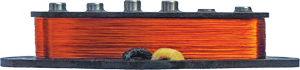
Haywire Custom Shop staggered SRV pickup
3. The Acoustic Stability Diagnostic: Is Your Top Swelling?
For acoustic and hollow-body players, the body itself is a living, breathing mechanical system that reacts constantly to the environment.
- The Straight-Edge Bridge Check: Look closely at the wooden bridge structure on the top of your acoustic guitar. If the wood behind the bridge pins looks noticeably bulged, or if the back edge of the bridge is starting to lift away from the finish, your guitar is over-hydrated.
- The Sinking Saddle: Conversely, if your action has suddenly dropped incredibly low and your open strings are buzzing everywhere, the guitar is dried out, causing the top to sink and lowering your saddle geometry.
Knowing When to Hand Off the Instrument
Running these diagnostic sweeps keeps you in complete control of your gear. It stops you from wasting money on the wrong fixes, and it tells you exactly what to look for before you hit the stage.
But remember: finding the symptom is the player's job—curing the disease is the builder's craft. Signature setups rely on a delicate web of interdependent measurements where a fraction of a millimeter changes everything.
If your diagnostic sweep reveals a shifting neck, an uneven fret register, or failing internal electronics, let a master tech handle the adjustments. Bring your instrument into our shop or ship it to us, and we'll perform the deep, multi-point custom shop calibration required to get your guitar operating at its absolute peak performance.
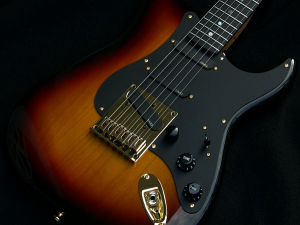
Haywire Custom Guitars Nashville Player #1 Strat with wide 2″ neck

Leave A Comment
You must be logged in to post a comment.