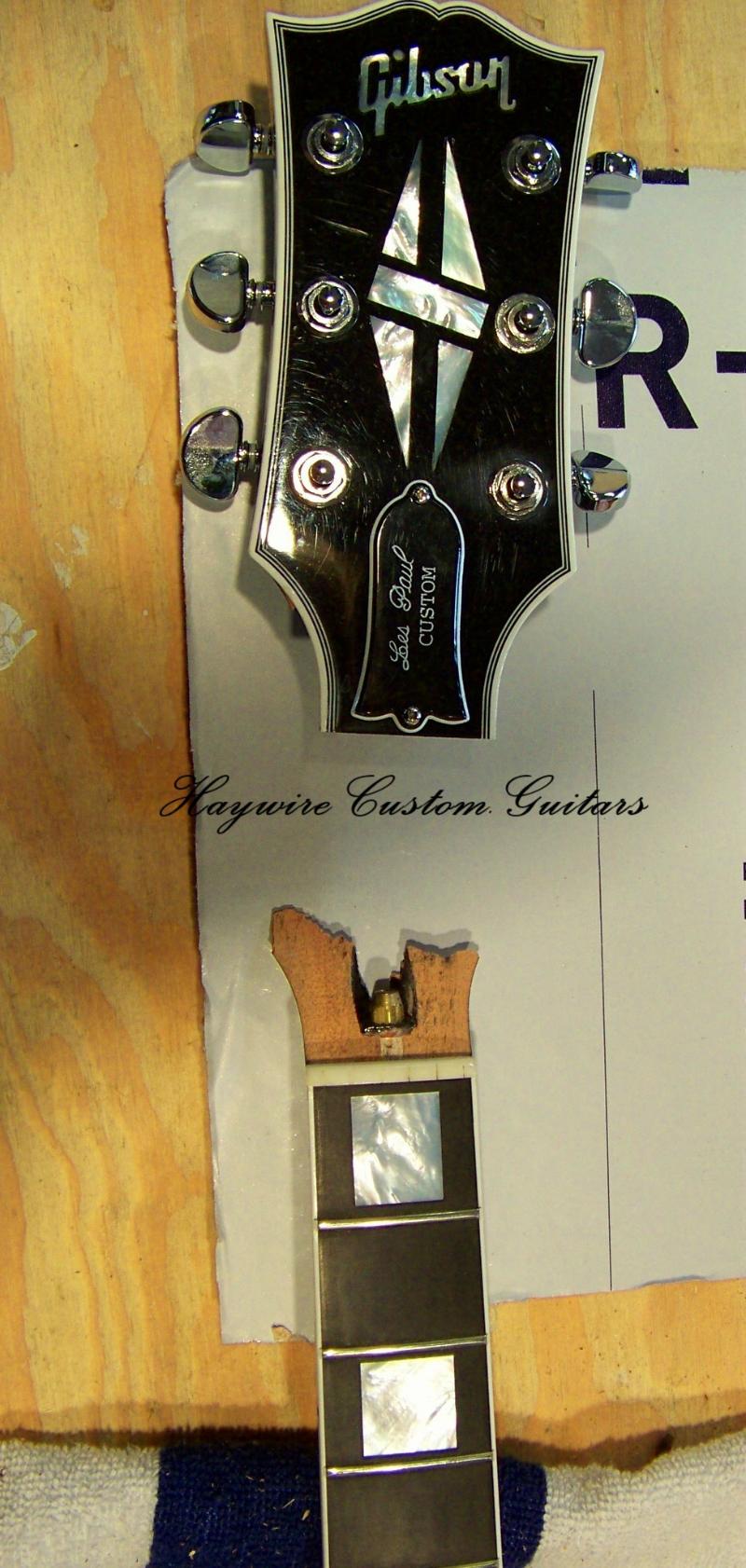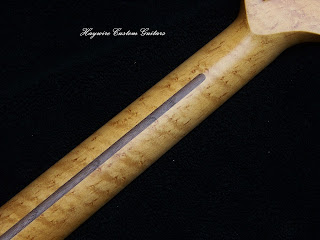
“Roasted Maple” Guitar Necks need special attention and care when installing. At Haywire Custom Guitars we noticed roasting makes the wood more brittle therefore can cause fastener failure at the neck bolts. Roasted maple guitar necks are used for their improved stability and resistance to temperature and humidity changes due to the roasting process, which removes moisture from the wood. This makes them less prone to warping or cracking compared to unroasted maple. Additionally, roasting can alter the wood’s appearance, resulting in a darker, more visually appealing color.
Here’s more:
Stability:
Roasting reduces the wood’s moisture content, making it less susceptible to the effects of humidity and temperature fluctuations, which can cause warping or cracking in unroasted wood. This makes the neck more stable and predictable.
Durability:
The roasting process can also increase the wood’s hardness and density, making it more durable and resistant to wear and tear.
Aesthetics:
The roasting process changes the color of the maple wood to a darker, often caramel-colored shade, which can be visually appealing to some.
Tonal Considerations:
While some claim that roasted maple has a brighter or more pronounced tone, others argue that the tonal differences are subtle and may not be noticeable.
Drawbacks:
Roasting can also make the wood more brittle, which may be a concern for some.