


Fretwork-Guitar Setups & Repair SC
A good guitar setup involves adjusting various components of the instrument to optimize playability and sound. Key aspects include ensuring the neck is straight, adjusting string action (height), setting the intonation, and making sure the guitar is properly tuned.
Here’s a more detailed breakdown:
1. Neck Relief:
- The truss rod is adjusted to create a slight curve in the neck, preventing buzzing and ensuring proper string action.
- Too much bow (front or back) can cause buzzing or difficulty playing.
- Correcting neck relief is a crucial first step in any setup.
2. String Action:
- This refers to the height of the strings above the frets.
- Proper action ensures comfortable playing without buzzing or excessive effort to fret notes.
- Adjusting the saddles (on the bridge) is the most common way to adjust string action.
- The goal is to find a balance between low action for easy playing and preventing buzzing.
3. Intonation:
- Intonation ensures that the notes played at the 12th fret are in tune with the open string.
- Adjusting the intonation screws on the bridge moves the saddle forward or backward, affecting the string length and thus intonation.
-
4. Tuning and Setup:
- A good setup involves ensuring the guitar is properly tuned using a reliable tuner.
- The tuning process may involve adjusting the tuning machines and ensuring proper string seating.
- Other adjustments may include pickup height, tightening loose hardware, and cleaning the guitar.
In summary, a good guitar setup combines a straight neck, optimal string action, accurate intonation, and proper tuning to create an instrument that is both easy to play and sounds its best. Proper intonation is critical for accurate tuning across the fretboard. Finding a good guitar repair shop involves considering a combination of the technicians’ expertise, the quality of customer service, the shop’s environment and tooling, their reputation, and the range of services they offer.
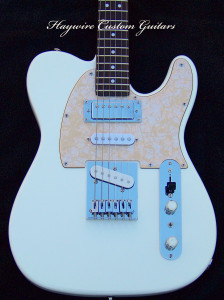
Haywire Custom Guitars white single cutaway style guitar
Fretwork-Guitar Setups & Repair SC Excellent Quality of service and customer interaction you deserve.
- Clear Communication: They should be able to explain the repair process, estimated costs, and turnaround times in a way you understand.
- Transparency: A reputable shop will be open to discussing the repair process and may even allow you to observe the work being done (though it’s polite to ask first).
- Attentive to Detail: Guitar repair often involves meticulous work, so look for a technician who demonstrates attention to detail and precision.
- Customer Service: A good shop treats customers with respect and addresses their concerns promptly and courteously.
- Responsiveness: They should be responsive to inquiries and provide timely updates on your guitar’s repair status.
Expertise and experience of the repair staff
- Qualified Luthiers/Technicians: Look for shops employing trained and experienced individuals, often called luthiers or guitar technicians, who specialize in stringed instrument repair.
- Demonstrated Knowledge: A good technician should have a deep understanding of guitar construction, wood characteristics, and how various components function. They should be knowledgeable about both acoustic and electric guitar intricacies.
- Specialization: Some shops specialize in certain types of repairs (e.g., fretwork, electronics) or specific brands. If you have a unique or complex issue, look for a specialist.
- Problem Solving Skills: A skilled technician can accurately diagnose the problem and offer effective repair solutions.
In conclusion: Many services offered
- Comprehensive Repair Options: They should be able to handle a range of repairs, from basic setups and restringing to more complex tasks like fretwork, structural repairs, and electronics troubleshooting.
- Parts and Accessories: A well-stocked shop should have common parts and accessories on hand or be able to order them quickly.
- A good setup involves ensuring the guitar is properly tuned using a reliable tuner.
- Intonation ensures that the notes played at the 12th fret are in tune with the open string.
- This refers to the height of the strings above the frets.


Leave A Comment
You must be logged in to post a comment.